It looked perfect in the demo. Gorgeous photography, smooth animations, a hundred layout options and a five-star rating. You bought the premium theme, installed it and started dropping in your own content.
Six months later, the story is different. Pages take an age to load on mobile. Half the features you paid for are switched off because they clash with something else. Changing a button colour requires digging through endless settings panels. And every theme update makes you nervous that something will break.
Off-the-shelf themes are not bad. For many new sites they are a sensible start. But there comes a point where a theme designed to please everyone starts holding back the one business that matters: yours. That is when a custom WordPress theme earns its keep.
Key takeaways
- Multipurpose themes trade speed and simplicity for features you may never use.
- A custom theme is built around your brand, your content and your customers.
- Lean code improves page speed, accessibility and search visibility.
- Modern block-based themes let your team edit content without a developer.
First, what is a WordPress theme?
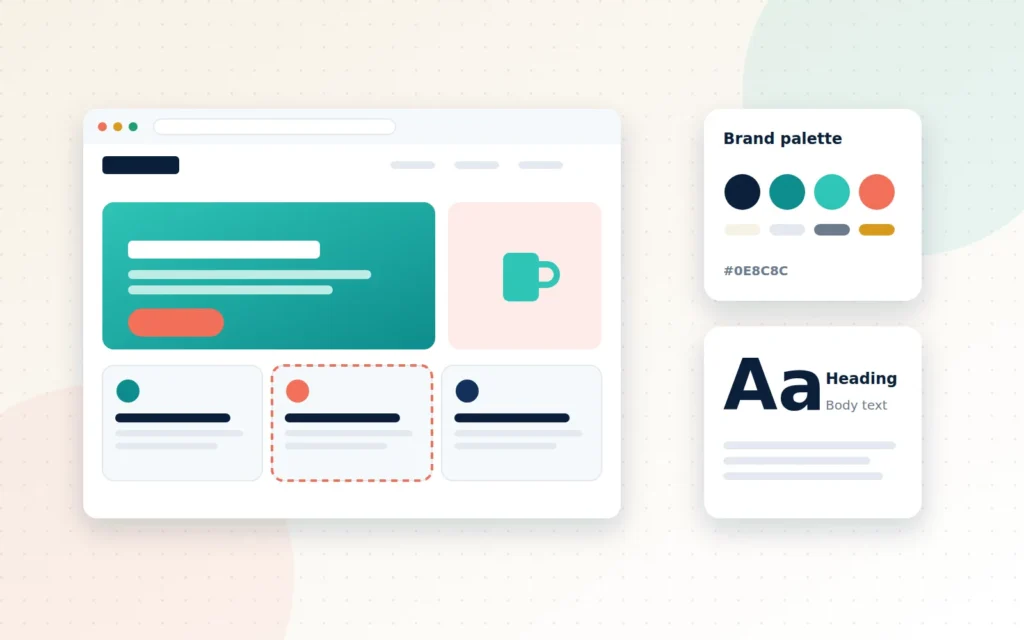
WordPress is the most widely used website platform in the world; by W3Techs’ count it runs more than 40% of all websites. The theme controls how a WordPress site looks and how its content is presented: layouts, typography, colours, headers and footers, and the templates for pages, posts and product listings. The theme is your site’s design and front-end structure. Your content and business features should live elsewhere, in WordPress itself and in plugins, so they survive a future redesign.
The hidden cost of “one theme fits all”
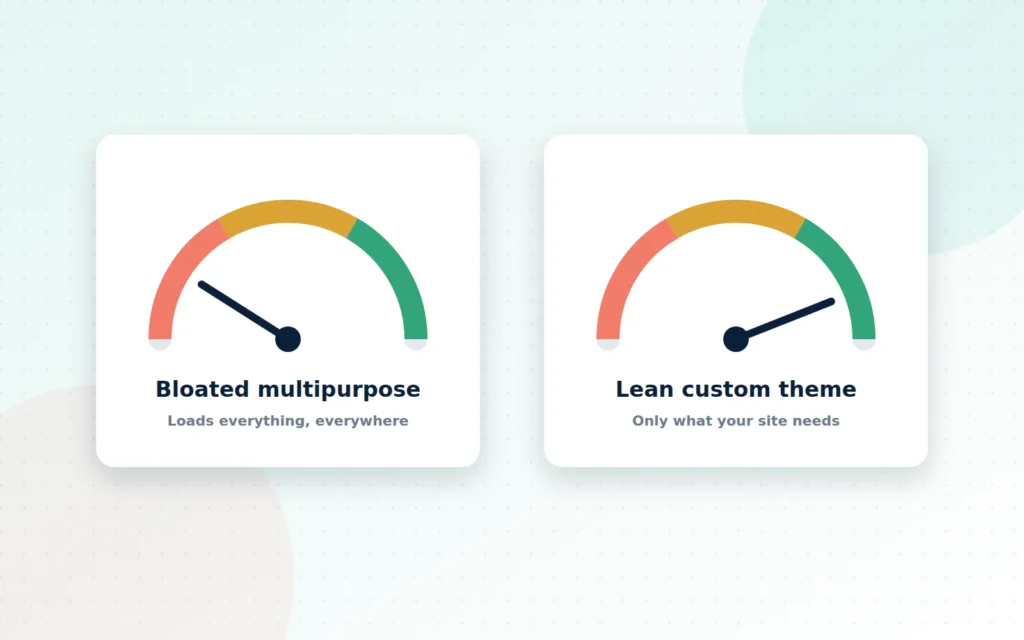
Multipurpose themes are built to sell to as many people as possible. To do that, they pack in dozens of layouts, sliders, animations and options. Every site using the theme loads much of that code, whether it needs it or not. The result is often:
- Slower pages, especially on mobile, which frustrates visitors and can hurt search rankings.
- Plugin overload, as missing features get added with yet more plugins.
- Fragile updates, where an update to the theme, a plugin or WordPress itself breaks something.
- A generic look, because thousands of other sites use the same design.
- Accessibility gaps, when visual flair takes priority over usability for everyone.
None of these appear in the demo. They appear later, as recurring frustration and lost customers.
What a custom theme gives you
A design that is unmistakably yours
A custom theme starts with your brand, your audience and your goals. Instead of fitting your business into someone else’s template, the design is built around how your customers think and what you need them to do, whether that is buying a product, requesting a quote or booking a call.
Speed by design
Because a custom theme includes only what your site needs, pages are lighter and faster. We set performance budgets from the start and test against Google’s Core Web Vitals, the measures Google uses to assess loading speed, responsiveness and visual stability. Faster pages mean happier visitors, better engagement and a stronger foundation for SEO.
Built for everyone
Accessibility means people with visual, motor or cognitive impairments can use your site comfortably, and it improves the experience for everyone. We design and build to the WCAG 2.2 AA guidelines: readable contrast, keyboard navigation, clear focus states, meaningful headings and descriptive image text. It is the right thing to do, and it widens your audience.
Easy to edit, hard to break
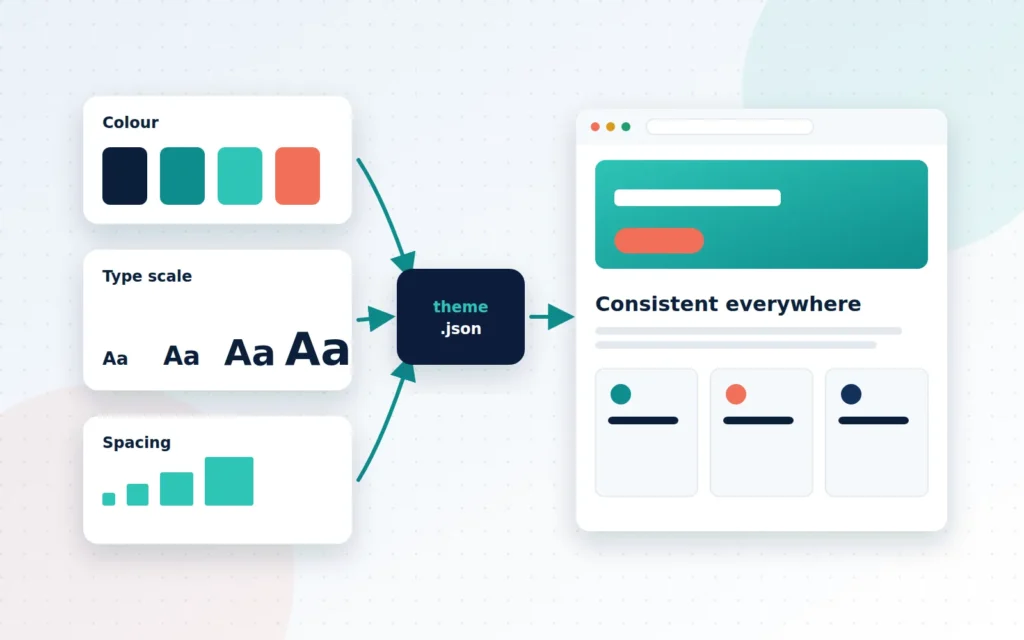
Modern WordPress uses blocks: reusable building pieces for text, images, buttons and layouts. A custom block theme gives your team branded patterns, such as a hero section, a testimonial strip or a pricing table, that they can drop into any page and edit safely. Colours, fonts and spacing are defined once as design tokens, so the whole site stays consistent and nobody accidentally invents a new shade of blue.
Ready for e-commerce
If you sell online, your theme needs to style WooCommerce properly: product listings, product pages, the cart, checkout and account pages. A custom theme treats these as first-class templates rather than an afterthought, so the shopping experience feels as polished as your home page.
Classic or block theme?
WordPress themes now come in two main styles. Classic themes use PHP templates and the traditional Customizer. They are mature, widely understood and still a good fit for many sites, particularly those with complex custom templates. Block themes use WordPress’s Full Site Editing, where headers, footers and page templates are all built from blocks and styled through a central settings file called theme.json.
Block themes give your team more control over layouts without code, and they make design consistency easier to enforce. Classic themes can offer finer control for unusual layouts and work with some older plugins more smoothly. We build both, and often combine the best of each: a solid, well-structured theme with branded block patterns that make everyday editing simple. The right choice depends on who will edit the site, how often and how much freedom they need.
Planning a redesign without losing ground
If you already have a WordPress site, a new theme does not mean starting over. Your pages, posts, products and media stay in WordPress. A careful redesign keeps your URLs, preserves your SEO work, redirects anything that moves and is tested thoroughly on a staging copy before it replaces your live site, so customers simply see a better website one morning.
When an off-the-shelf theme is fine
Honesty matters here. If you are testing a new idea, have a very small budget or need a simple brochure site quickly, a well-chosen, lightweight theme can be the right call. A custom theme makes most sense when:
- Your site is central to how you win customers or sales.
- Speed, accessibility and SEO directly affect your revenue.
- Your brand needs to stand out in a crowded market.
- You have outgrown your current theme and are fighting it daily.
- You want a site that will last for years, not months.
What makes a theme “well built”
Whoever builds your theme, look for these qualities:
- Follows WordPress coding standards and best practices.
- Keeps design (theme) separate from business features (plugins).
- Uses version control and comes with documentation.
- Is tested on real phones and browsers, not just a large desktop screen.
- Is easy to update and has no unnecessary dependencies.
What working with Cayman Ecommerce looks like
We start by understanding your brand, audience and goals, and reviewing a few sites you admire, along with what you like about them. We then create wireframes to agree structure, followed by visual designs for key pages. Once approved, we build your theme with block patterns, design tokens and WooCommerce templates where needed, and test accessibility and performance throughout. You receive an installable, documented theme, design files and a style guide, plus training for your team. Most theme projects take three to six weeks.
Here is what we will ask you to prepare.
The bottom line
A theme is not just a coat of paint. It shapes how fast your site feels, how easy it is to use, how well it ranks and how confidently your team can keep it fresh. Off the rack can get you started. Made to measure helps you stand out and keeps you moving.
If your current theme is holding you back, let us design one that fits.
Frequently asked questions
How is a custom theme different from a page builder?
Page builders add a layer of extra code to every page so that anything can be dragged anywhere. A custom theme builds only what your site needs, using WordPress's own block editor, which is usually faster and easier to maintain while still letting your team edit content.
Will I be able to edit the site myself?
Yes. We build with editable blocks and patterns, so your team can update text, images and pages without touching code, and we provide training and documentation.
Can you redesign my current WordPress site without losing content?
In most cases, yes. A new theme changes how content is presented, not the content itself. We plan the move carefully, test it on a staging site and keep your URLs and SEO intact.
Ready when you are
Let’s talk about your WordPress Theme Development
Custom WordPress themes, designed for your brand and built to last.