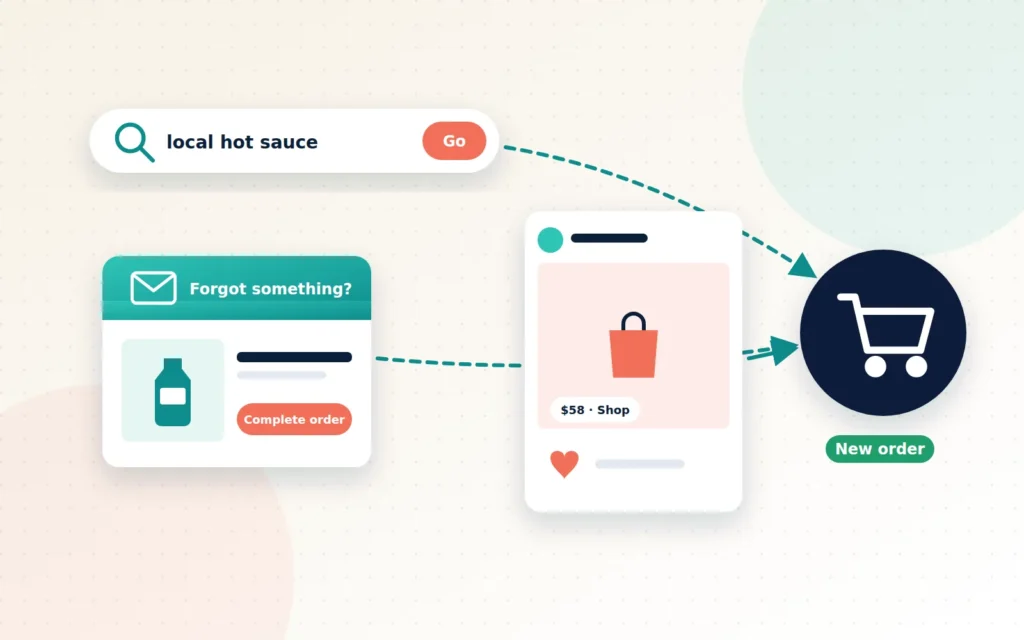
You post on social media most days. You ran a promotion last month. You even boosted a few posts. The likes came in, a few comments too. But when you looked at your sales, very little had changed.
You are not alone. Many business owners feel like they are shouting into the void: lots of effort, very little return. The problem is rarely a lack of hard work. It is usually that the activity is not connected to a plan, the right channels or a way of measuring what actually brings in buyers.
Good digital marketing for an online store is not about being everywhere. It is about being found by the people already looking for what you sell, staying in touch with the ones who showed interest, and turning first-time buyers into regulars. This guide shows how the main channels fit together.
Key takeaways
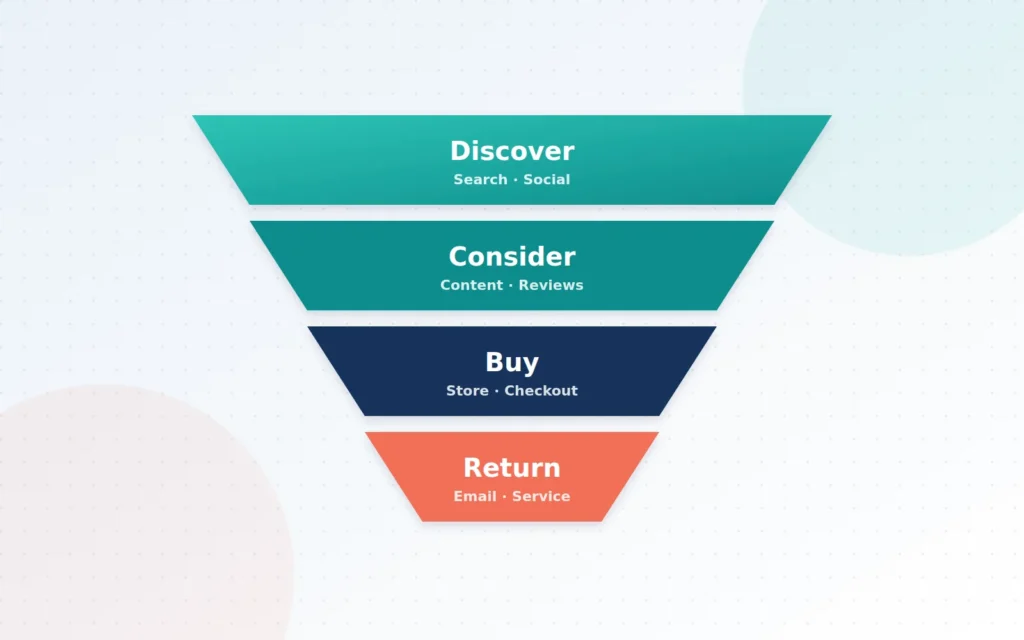
- Effective marketing follows the buying journey: discover, consider, buy and return.
- SEO brings in customers who are already searching for what you sell.
- Automated email flows recover abandoned carts and drive repeat purchases.
- Tracking conversions is what separates real results from vanity metrics.
Start with the journey, not the channel
Every customer goes through roughly the same stages:
- Discover: they realise they need something and start looking.
- Consider: they compare options, read reviews and check prices.
- Buy: they choose a supplier and complete a purchase.
- Return: they come back, buy again and recommend you.
Different channels do different jobs at each stage. Search and social help people discover you. Your website, reviews and content help them consider you. A smooth store helps them buy. Email and great service bring them back. When you plan marketing around this journey, every activity has a clear purpose.
SEO: be there when buyers are searching
Search engine optimisation (SEO) is about appearing when someone types exactly what you sell into Google. These visitors are valuable because they are already looking; you are not interrupting them.
For an online store, good SEO covers three areas:
- Technical SEO: making sure search engines can crawl your site, pages load quickly, there are no broken links and your product pages use structured data so they can show prices and availability in results.
- On-page SEO: writing clear, unique titles, descriptions and product copy that match the words your customers actually use.
- Local SEO: making sure nearby customers find you, with an accurate Google Business Profile, consistent contact details and local content.
Content plays a big part too. Helpful guides, buying advice and answers to common questions attract searchers early in their journey and build trust long before they buy.
SEO is a long game. Some fixes help quickly, but meaningful growth usually builds over months. That is exactly why it works best alongside channels that deliver sooner.
Email: the channel you actually own
Social platforms change their rules constantly, and you never truly own your followers. Your email list is different. It is yours, and it reaches people who have already shown interest in your business.
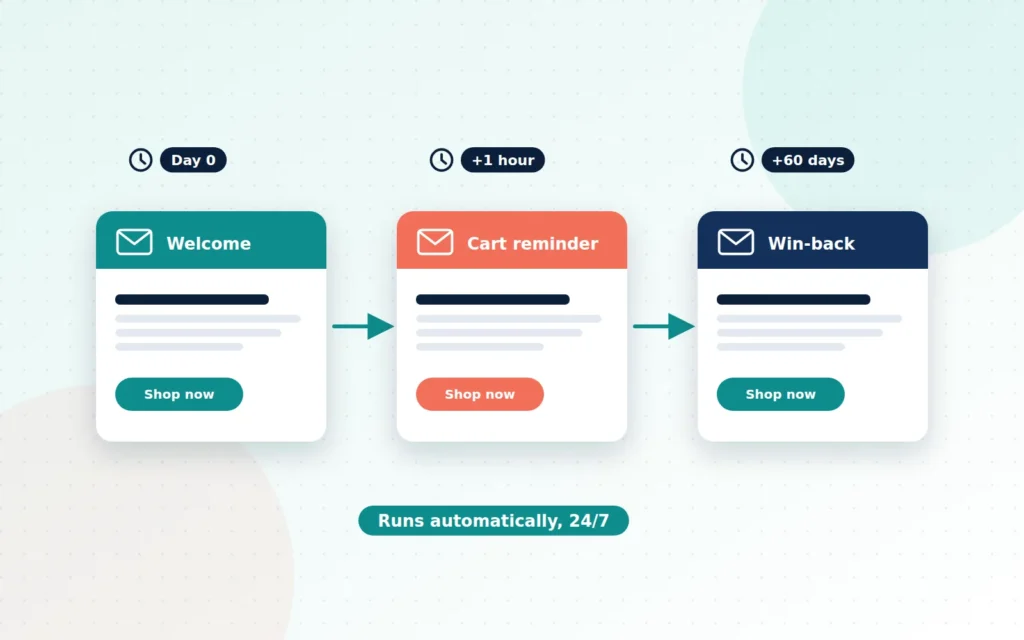
The real power of email for e-commerce is automation. A few well-written flows can run in the background and keep earning:
- Welcome series: introduce your brand, best-sellers and promises to new subscribers.
- Abandoned cart reminders: gently remind shoppers who left items behind, often the single most valuable flow a store can have.
- Post-purchase emails: thank customers, share care tips and ask for reviews.
- Win-back campaigns: reconnect with customers who have not bought in a while.
For B2B sellers, email works brilliantly for reorder reminders, new product announcements and account updates.
Social media: go where your buyers already are
Social media is excellent for discovery and brand personality, but it works best when it is connected to your store. Product catalogues on Instagram and Facebook let people tap a post and see the product, price and a link to buy. Google Shopping feeds put your products, with prices and images, directly into search results.
You do not need to be on every platform. Choose one or two where your customers spend time and do them well: consistent posting, genuine engagement and content that shows your products in use. Business buyers are more likely to be found on LinkedIn; consumers on Instagram, Facebook or TikTok.
Measure what matters
Likes, followers and impressions feel good, but they do not pay the bills. The numbers that matter are the ones linked to revenue:
- Conversion rate: the percentage of visitors who buy.
- Revenue by channel: which sources bring in actual sales.
- Average order value: how much customers spend each time.
- Customer acquisition cost: what it costs to win a new customer.
- Repeat purchase rate: how many customers come back.
Proper conversion tracking, such as Google Analytics 4 e-commerce events, shows you exactly which activities work, so you can do more of them and stop wasting money on the rest.
A simple first 90 days
If you are starting from scratch, or starting over, here is a sensible sequence:
Month one: foundations. Set up conversion tracking so you can measure results. Fix the most important technical SEO issues. Claim and complete your Google Business Profile. Add an email sign-up offer to your website, such as a welcome discount or a useful guide.
Month two: automation. Build your welcome series and abandoned cart emails. Connect your product catalogue to Instagram, Facebook and Google Shopping. Improve titles and descriptions for your top products and categories.
Month three: momentum. Publish helpful content that answers your customers’ most common questions. Run your first planned email campaign around a seasonal moment. Review the numbers, identify what worked best and double down on it.
This order matters. Measurement comes first, because without it you cannot tell what is working. Automation comes next, because it keeps delivering long after the work is done. Content and campaigns build on top of both. Our free 90-day plan below turns this into a week-by-week checklist you can follow.
Signs your marketing needs a rethink
- You are busy on social media but cannot link it to sales.
- Your website gets visits, but very few buyers.
- You do not have an email list, or you never email it.
- You do not appear in search results for your main products.
- You are not sure which of your marketing activities actually work.
What working with Cayman Ecommerce looks like
We start with an audit of your website, search visibility, social channels and any existing email activity. We then agree goals and a plan. Typical first steps include fixing technical SEO issues, setting up conversion tracking, building your core email automations and connecting your product catalogue to social and Google Shopping. From there, we work month by month, creating content, running campaigns and sending you a clear report that explains what happened and what we will do next.
Here is what we will need from you to start.
The bottom line
Marketing should feel less like shouting and more like a well-run shop: easy to find, welcoming to browse and somewhere people want to come back to. When search, email and social work together, and you measure what matters, every hour and dollar you invest starts pulling its weight.
If you are ready to swap busywork for buyers, let us build your plan together.
Frequently asked questions
How long does SEO take to work?
Technical fixes can help quickly, but meaningful organic growth usually builds over several months. That is why we pair SEO with email and social activity that can deliver results sooner.
Do I need to post on every social platform?
No. It is better to do one or two platforms well, where your customers actually spend time, than to spread yourself thin. We help you choose based on your audience.
How will I know if marketing is working?
We set up conversion tracking and send a clear monthly report showing traffic, sales, email performance and what we are changing next, in plain English.
Want us to check your store for you?
Tell us where your store lives and what matters most. We’ll send a prioritised, plain-English fix list within 2 business days — free.
Ready when you are
Let’s talk about your Digital Marketing
SEO, email and social that bring the right buyers to your store.