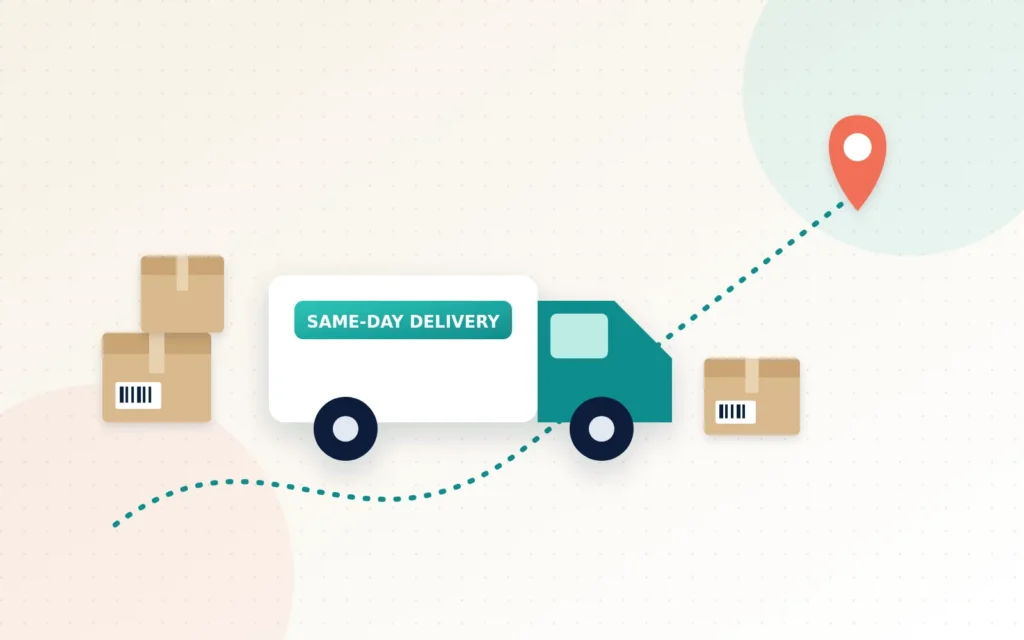
Here is something every online seller learns eventually: for the customer, the sale is not finished when they pay. It is finished when the parcel arrives, in good condition, when they were told it would.
Everything in between, the waiting, the wondering, the “has it even shipped yet?”, is part of your customer experience. Handle it well and you earn trust, reviews and repeat orders. Handle it badly and even a great product can leave a bad taste.
For businesses in the Cayman Islands, shipping comes with its own twists: island-wide delivery, inter-island logistics, international orders and import timelines. The good news is that with the right setup, delivery stops being a daily scramble and becomes one of the reasons customers choose you.
Key takeaways
- Clear, upfront shipping costs and delivery times reduce abandoned checkouts.
- Live rates, label printing and pick lists can cut fulfilment time dramatically.
- Local delivery and pickup options are a real advantage for island businesses.
- Automatic tracking updates prevent “Where is my order?” messages and build trust.
Shipping starts at checkout, not in the warehouse
Unexpected costs are one of the most common reasons shoppers abandon a checkout. If delivery charges appear only at the final step, many customers simply leave. The fix is transparency: show delivery options and costs as early as possible, ideally on the product page or in the cart, and state realistic delivery times.
Think about the options your customers actually want:
- Standard delivery at a fair, predictable price.
- Express or scheduled delivery for customers who need certainty.
- Local delivery zones with their own pricing, for example within George Town or across Grand Cayman.
- In-store or click-and-collect pickup, which is free for the customer and often brings them through your door.
- Free delivery thresholds, such as free delivery over a set order value, which can lift average order size.
For business buyers, add the details they care about: delivery windows, pallet or bulk shipping, and accurate lead times for large orders.
Getting the rates right
Shipping prices should be simple for customers and sustainable for you. There are a few common approaches:
- Flat rates are easy to understand but can over- or under-charge.
- Weight or size-based rates are fairer for varied product ranges, but rely on accurate product data.
- Live carrier rates pull real prices from your carrier at checkout.
- Zone-based pricing sets different prices for different areas or countries.
The right mix depends on your products and where you ship. What matters most is that your rates cover your real costs without scaring off buyers, and that your product weights and dimensions are recorded correctly so the maths works.
Fulfilment: from click to box, faster
Behind the scenes, fulfilment is a sequence of small tasks: see the order, pick the items, pack them, create a label, hand it over and mark it shipped. Done manually, each step takes a few minutes. Multiply that by dozens of orders and you have lost a day.
A good fulfilment setup gives your team:
- Pick lists grouped by location, so staff collect items efficiently.
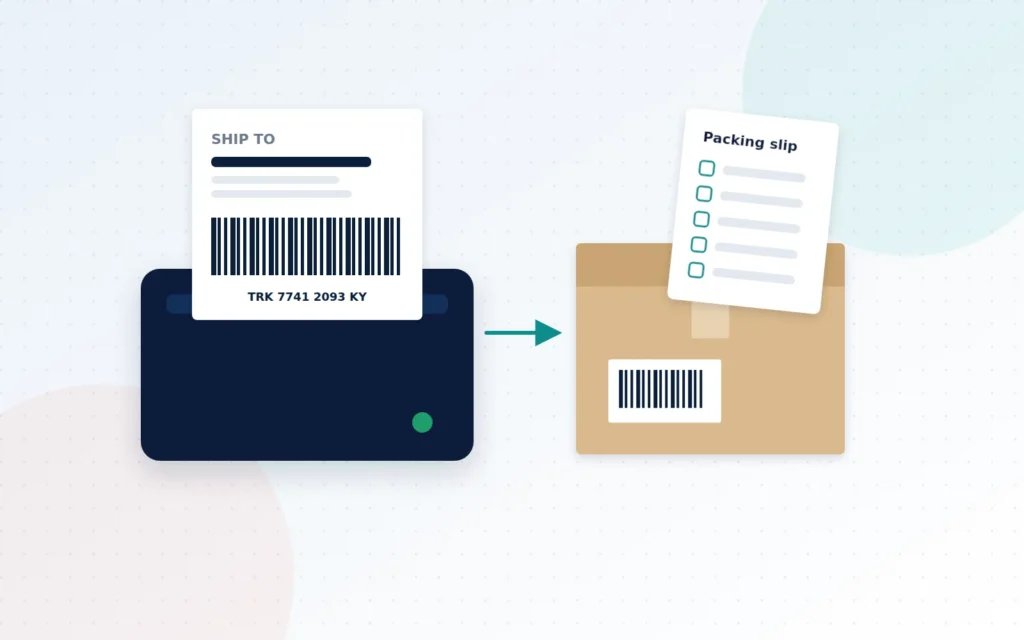
- Packing slips printed automatically with each order.
- One-click shipping labels with the correct address and service, ready to stick on the box.
- Batch processing, so a morning’s orders can be labelled together.
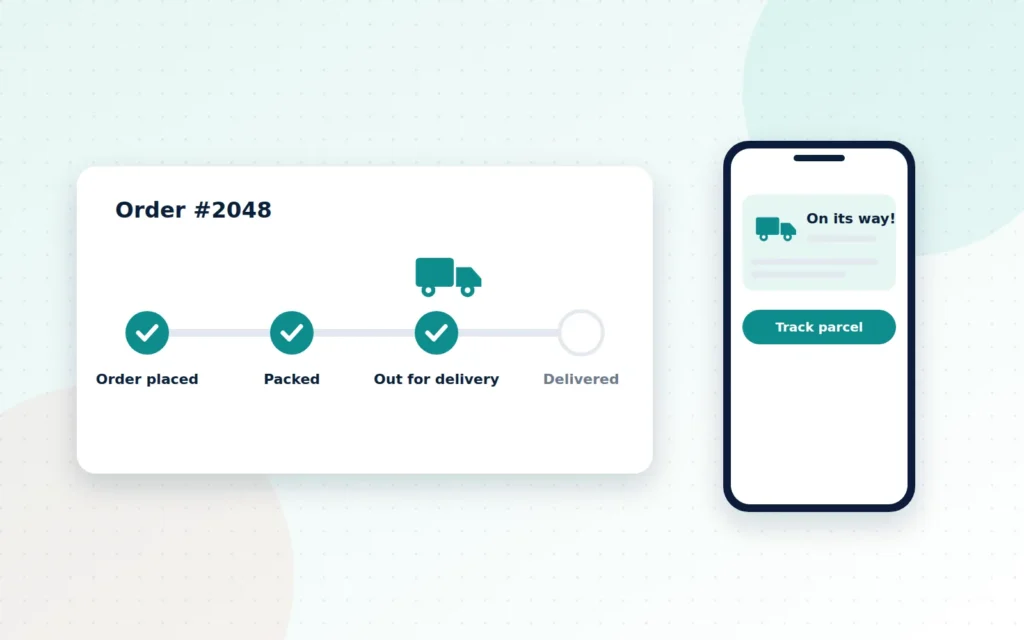
- Automatic status updates the moment a label is created.
Tracking: the update your customers are waiting for
“Where is my order?” is one of the most common customer service questions in e-commerce. Every one of those messages takes time to answer, and each one is a small signal that the customer feels uncertain.
Proactive tracking fixes this. As soon as an order ships, customers receive an email or SMS with a tracking link. Further updates go out when the parcel is out for delivery and when it arrives. A tracking page on your own website keeps customers on your brand rather than sending them to a carrier’s site, and it gives you a chance to suggest related products while they wait.
Returns: the part nobody wants to plan, but everybody should
Returns are part of selling online, and a clear, fair returns process is a trust signal in its own right. Customers are more willing to buy when they know what happens if something is not right. Publish a simple returns policy, make it easy to request a return, and track returned items so stock levels and refunds stay accurate. For B2B customers, define how damaged or incorrect deliveries are reported and resolved.
Special considerations for island businesses
Selling from the Cayman Islands brings particular challenges and opportunities:
- Local delivery is a strength. Same-day or next-day delivery within your area can be a real edge over overseas competitors.
- International shipping needs clear expectations. Be upfront about delivery timescales, duties and taxes so there are no surprises at the door.
- Inbound stock timelines matter. Delivery promises should account for how long it takes to restock imported items.
- Packaging counts. Heat, humidity and longer transit times call for packaging that protects products properly.
Packaging and the unboxing moment
For many customers, opening your parcel is the first time they physically touch your brand. It is worth getting right. Packaging should protect the product first: the right box size, enough padding and seals that survive heat, humidity and handling. After that, small touches go a long way. A branded sticker, a short thank-you note, care instructions or a discount code for the next order all turn a delivery into a moment customers remember, and sometimes share.
For business customers, the priorities shift towards practicality. Clear labelling of contents, purchase order references on the packing slip, and consistent packing that makes receiving and checking deliveries quick will be appreciated by their warehouse team. Whatever you sell, consistent packaging also reduces damage claims and returns, which protects your margins.
Measuring delivery performance
What gets measured gets improved. A few simple numbers will tell you how your shipping is performing: the average time from order to dispatch, the share of orders delivered within the promised window, the percentage of deliveries with problems such as damage or wrong items, and how much you spend on shipping compared with what you charge. Review them monthly. If dispatch times creep up or delivery complaints rise, you will spot it early and fix it before customers start to notice.
Signs your shipping setup needs work
- Customers regularly ask where their order is.
- Staff spend hours writing addresses or copying details into carrier websites.
- Delivery charges often fail to cover what you actually pay.
- You do not offer local delivery or pickup, even though customers ask for it.
- Returns are handled by email with no clear process.
What working with Cayman Ecommerce looks like
We start by understanding your products, carriers, delivery areas and how orders are fulfilled today. We then configure shipping zones, methods and rates on your store, connect your carriers and set up label and packing slip printing. We add local delivery scheduling and pickup options where they fit, and create branded tracking pages and notification templates. Finally, we test the full journey from checkout to doorstep and train your team. Most shipping projects take one to three weeks.
Here is what we will need from you.
The bottom line
Delivery is the moment your brand becomes real in your customer’s hands. Fast, transparent and well-communicated shipping turns a one-time buyer into a regular, and it saves your team hours every single week.
If you would like your deliveries to be a reason customers come back, we are ready to help.
Frequently asked questions
Can you set up local delivery and in-store pickup?
Yes. We configure delivery zones with their own prices and schedules, plus click-and-collect pickup, so customers choose the option that suits them at checkout.
Do I need a special label printer?
Not necessarily. Labels can print on a regular printer, but a thermal label printer is faster and cheaper per label if you ship regularly. We can recommend one and set it up for you.
How do customers track their orders?
We set up automatic email or SMS notifications with tracking links, plus an order tracking page on your website, so customers can check progress at any time.
Want us to check your store for you?
Tell us where your store lives and what matters most. We’ll send a prioritised, plain-English fix list within 2 business days — free.
Ready when you are
Let’s talk about your Logistics & Shipping
Fulfil orders, print labels and track every delivery.